木 火 土 金 水 – Wood Fire Earth Metal Water
The pulse of pop culture in Japan is once again beating to the rhythm of dark fantasy, with ‘地獄楽’ (Jigokuraku), known to many as Hell’s Paradise, igniting fervent discussions across the nation. Reporting by industry heavyweights like アニメイトタイムズ, Yahoo!ニュース, and eeo Today confirms a massive surge in interest, with search volumes exploding beyond 1000+ queries today alone. This isn’t just a ripple; it’s a tidal wave of fan engagement, signalling a prime opportunity for creators to tap into a deeply passionate audience.
The Cultural Significance
The latest episode of Jigokuraku‘s highly anticipated second season has landed, and with it, a fresh wave of excitement has swept through its dedicated fanbase. This isn’t just about watching a new installment; it’s about dissecting plot points, celebrating character arcs, and immersing oneself deeper into the richly violent yet philosophically profound world created by Yuji Kaku. The series, renowned for its stunning animation, brutal action, and unique blend of historical fantasy with Taoist philosophy, commands an incredibly active and engaged community. Each new release becomes a cultural event, driving conversations across social media, forums, and fan gatherings, making it a powerful trend for merchandise that resonates with its core appeal.
Design Analysis: Capturing the Aesthetic
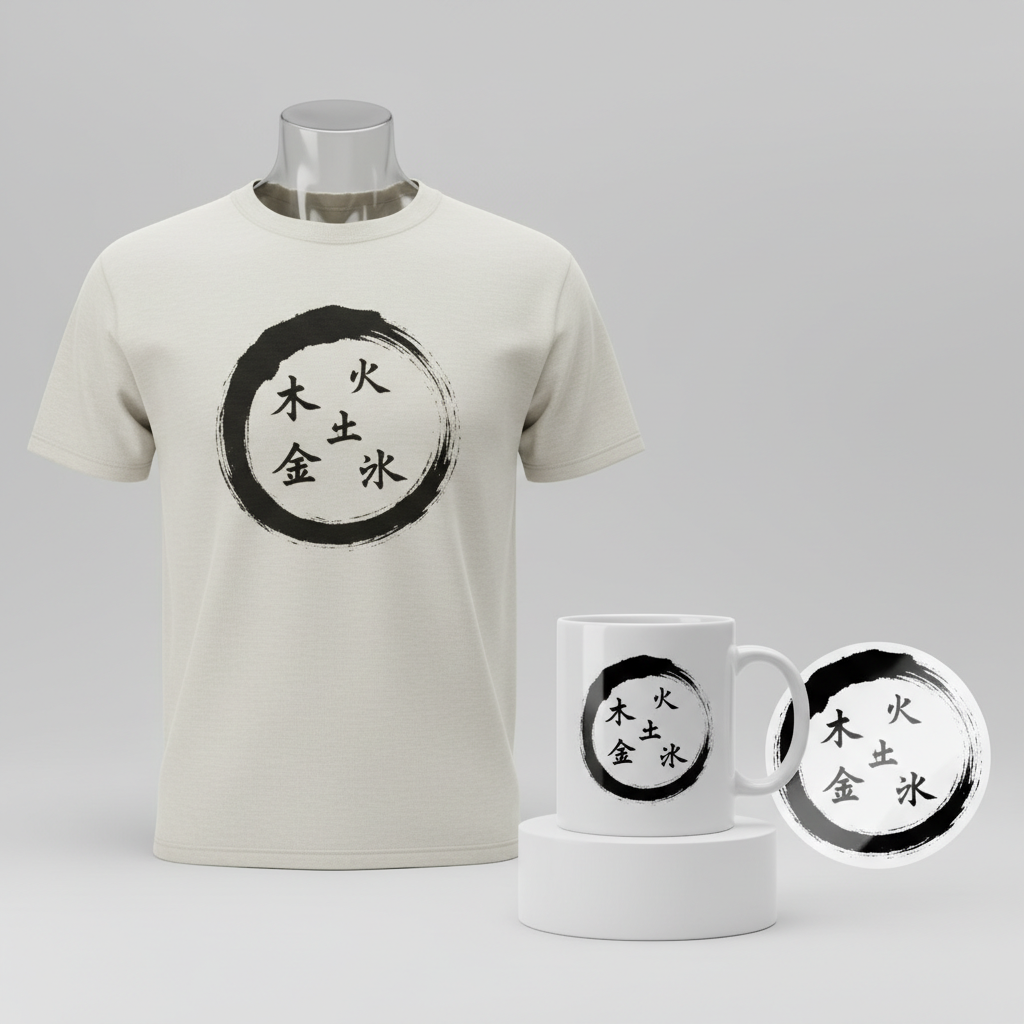
- 🎨 Visual Style: This concept channels the stark beauty and philosophical depth of Jigokuraku through a traditional Japanese sumi-e ink wash painting aesthetic. At its core lies a dynamic, calligraphic ensō, a symbol of enlightenment and the universe, rendered with fluid brushstrokes. Within this circle, the five kanji representing the fundamental Taoist elements—木 (Wood), 火 (Fire), 土 (Earth), 金 (Metal), 水 (Water)—are arranged with artistic precision. The overall style is fluid and gritty, with a dark, atmospheric feel that perfectly echoes the show’s intense and often sombre tone, making it instantly recognizable to fans without being overtly graphic.
- ✍️ Typography: The “text” in this design is not traditional typography but rather the powerful visual representation of the kanji for the five Taoist elements: 木 火 土 金 水. These characters are integrated as artistic elements within the ensō, rendered in a calligraphic style that complements the sumi-e aesthetic. Their arrangement is deliberate, creating a harmonious yet impactful visual that speaks directly to the series’ core lore and power system, offering a subtle nod to the educated fan.
- 👕 Product Selection: Given the dark, ink-wash nature of the design and its nuanced philosophical theme, this concept is ideally suited for application on light-coloured apparel. A light background will allow the dark sumi-e strokes and the intricate kanji to stand out with maximum contrast and clarity, ensuring the artistic details are fully appreciated.
Strategic Market Insight
This design is meticulously crafted to resonate deeply with the dedicated ‘otaku’ demographic of Jigokuraku manga and anime. The five Taoist elements are not merely decorative; they are a cornerstone of the series’ lore, a concept that only serious, invested fans would instantly recognize and appreciate. This strategic subtlety transforms the merchandise from a generic fan item into a badge of honour – a piece that signifies an “in-the-know” appreciation for the series’ deeper themes. It allows fans to express their passion in an artistic, sophisticated manner, appealing to their desire for unique, authentic representation that goes beyond overt character graphics. Owning such a piece becomes a quiet declaration of their immersion in the Hell’s Paradise universe, fostering a strong sense of belonging and identity within the fandom.
⚖️ Estimated Copyright Risk: LOW
Our Findings: The title ‘地獄楽’ (Jigokuraku) is trademarked. However, this design does not use the title or any character likenesses. The kanji for the five basic elements (wood, fire, earth, metal, water) are fundamental parts of the Japanese language and Taoist philosophy and cannot be trademarked in this context.
Always verify intellectual property rights before listing.
Check Japan Trademark Search for “地獄楽” ➔
AI Image Generation Prompts
The following prompts are optimized for leading generators to produce production-ready assets:
👕 Apparel / T-Shirt Prompt
A traditional Japanese sumi-e ink wash painting style design, optimized for a t-shirt print. Isolated on a solid Light background, clean vector illustration style. At the core, a highly dynamic, energetic calligraphic ensō (zen circle) rendered with bold, fluid, and expressive brushstrokes, exhibiting a profound sense of movement and raw power. Within this ensō, the five kanji for the core Taoist elements – 木 (Wood), 火 (Fire), 土 (Earth), 金 (Metal), 水 (Water) – are arranged aesthetically and harmoniously, each character rendered in a powerful, slightly abstract calligraphic sumi-e style that complements the ensō. The entire composition emanates a dark, slightly gritty aesthetic, achieved through nuanced vector textures simulating ink bleed, dry brush effects, and subtle charcoal smudges, yet maintaining pristine, crisp lines and smooth vector gradients suitable for high-quality screen printing. The black ink is rich and deep, ranging from opaque solids to translucent greys, creating dramatic contrast and visual depth against the light background. The overall mood is ancient, powerful, artistic, and modernly stylized, with a graphic design sensibility that is both bold and sophisticated. Print-ready, high-resolution vector art, minimalist complexity, elegant and impactful. The ONLY text allowed in the image is exactly '木 火 土 金 水'. Absolutely NO other names, words, or random letters. --ar 3:4 --v 6.0
🔍 Search this niche on:
☕ Drinkware / Mug Prompt
A duplicated side-by-side layout showing the exact same graphic on the left and right, designed perfectly for a panoramic mug wrap. The central graphic features a captivating traditional Japanese sumi-e ink wash painting. At the heart is a powerful, dynamically rendered calligraphic ensō, formed by a single, sweeping ink brushstroke that feels raw and spontaneous. Inside this ensō, the five kanji – 木 (Wood), 火 (Fire), 土 (Earth), 金 (Metal), 水 (Water) – are expertly integrated, each character painted with an authentic sumi-e technique, evoking fluidity and natural energy, arranged to create a visually balanced and compelling focal point. The aesthetic is dark and slightly gritty, with deep, rich black ink and varying shades of charcoal grey, depicting intricate ink splatters, brush hair textures, and subtle organic imperfections characteristic of genuine ink wash art. The rendering style is artistic and fluid, with delicate translucency in lighter ink washes contrasting sharply with dense, opaque brushwork, creating strong chiaroscuro effects. This design should feel ancient, powerful, spiritual, and visually striking, optimized for a seamless wrap-around application on a cylindrical surface, ensuring continuity and impact from every angle. The ONLY text allowed in the image is exactly '木 火 土 金 水'. Absolutely NO other names, words, or random letters. --ar 3:1 --v 6.0
🔍 Search this niche on:
✨ Die-Cut Sticker Prompt
A vibrant, 2D flat pop-art style design of a traditional Japanese sumi-e ink wash painting, optimized for a die-cut sticker, featuring a prominent thick white outline border around the entire design. The core design showcases a highly stylized, dynamic calligraphic ensō, rendered with bold, graphic lines and solid, saturated black ink, giving it a strong visual punch. Within the ensō, the five kanji for the Taoist elements – 木 (Wood), 火 (Fire), 土 (Earth), 金 (Metal), 水 (Water) – are depicted with crisp, clean edges in a complementary flat black or very dark grey, arranged aesthetically. The entire composition maintains the fluid, artistic spirit of sumi-e but is reinterpreted through a modern pop-art lens: flat colors, high contrast, and a deliberate sense of graphic minimalism, yet with subtle, simulated gritty textures or distressed edges applied as flat graphic elements within the design to match the show's dark aesthetic. The overall look is impactful, eye-catching, and clearly defined, making it ideal for a sticker. The thick white outline border creates a striking separation from any background, enhancing its visual prominence. Bold, clear, high-definition, vectorized for sharp edges. The ONLY text allowed in the image is exactly '木 火 土 金 水'. Absolutely NO other names, words, or random letters. --ar 1:1 --v 6.0
🔍 Search this niche on:
Frequently Asked Questions
Why choose a subtle, lore-based design instead of direct character imagery?
Dedicated fans often appreciate designs that offer a deeper, more sophisticated connection to the series’ universe. While character art is popular, subtle, lore-based designs like the five Taoist elements appeal to the “in-the-know” segment of the fandom, allowing them to showcase their appreciation in a unique, artistic, and less overt manner. It signifies a deeper understanding of the series’ core themes and philosophy.
What is the significance of the five kanji (木 火 土 金 水) in the context of Jigokuraku?
In Jigokuraku, the five kanji – Wood, Fire, Earth, Metal, and Water – represent the fundamental Taoist elements that form the basis of the Tensen’s powers and the underlying philosophical structure of the island of Shinsenkyo. Recognizing these elements is key to understanding the series’ combat system and its mystical lore, making them a powerful symbol for truly invested fans.
How does the sumi-e ink wash style enhance the merchandise appeal for Hell’s Paradise fans?
The sumi-e ink wash style naturally aligns with Jigokuraku‘s traditional Japanese setting and its often dark, philosophical themes. This artistic choice evokes a sense of ancient beauty and raw power, mirroring the series’ aesthetic. It elevates the merchandise beyond typical graphic prints, offering a piece that feels both authentic to the source material and artistically valuable, appealing to fans who appreciate fine art alongside their anime.
💬 Seller Strategy Discussion
Considering the cultural depth and implied IP of ‘Jigokuraku’, how would print-on-demand sellers navigate potential copyright considerations while still offering merchandise that resonates deeply with this trend-savvy fanbase?