DETROIT FOOTBALL EST. 1929
The sports world is abuzz, and nowhere is that more evident than in the United States, where search queries for “Cade Mays” have surged to over 5000+ today. This explosive interest isn’t just a fleeting moment; it’s a testament to the power of a strategic signing, with major outlets like The Detroit News, Yahoo Sports, and Panthers Wire all reporting on the breaking news. The buzz centers around free-agent center Cade Mays reportedly agreeing to a lucrative three-year, $25 million contract with the Detroit Lions. For a fanbase hungry for success and stability, this move isn’t just about one player; it’s a beacon of hope for their offensive line and, by extension, their Super Bowl aspirations.
The Cultural Significance
The signing of Cade Mays isn’t merely a transaction; it’s a cultural touchstone for the city of Detroit and its dedicated football faithful. The Detroit Lions fanbase is legendary for its unwavering loyalty, often described as passionate and long-suffering. Now, with a significant investment in a key offensive line position, that suffering is slowly giving way to a potent wave of optimism. This moment transcends individual player performance; it’s about the collective belief in a team’s direction, a city’s resolve, and the intoxicating promise of a brighter future. Fans aren’t just celebrating Mays; they’re celebrating the renewed hope he represents for an entire franchise and its storied history, fueling a collective excitement that transforms casual interest into fervent civic pride.
Design Analysis: Capturing the Aesthetic
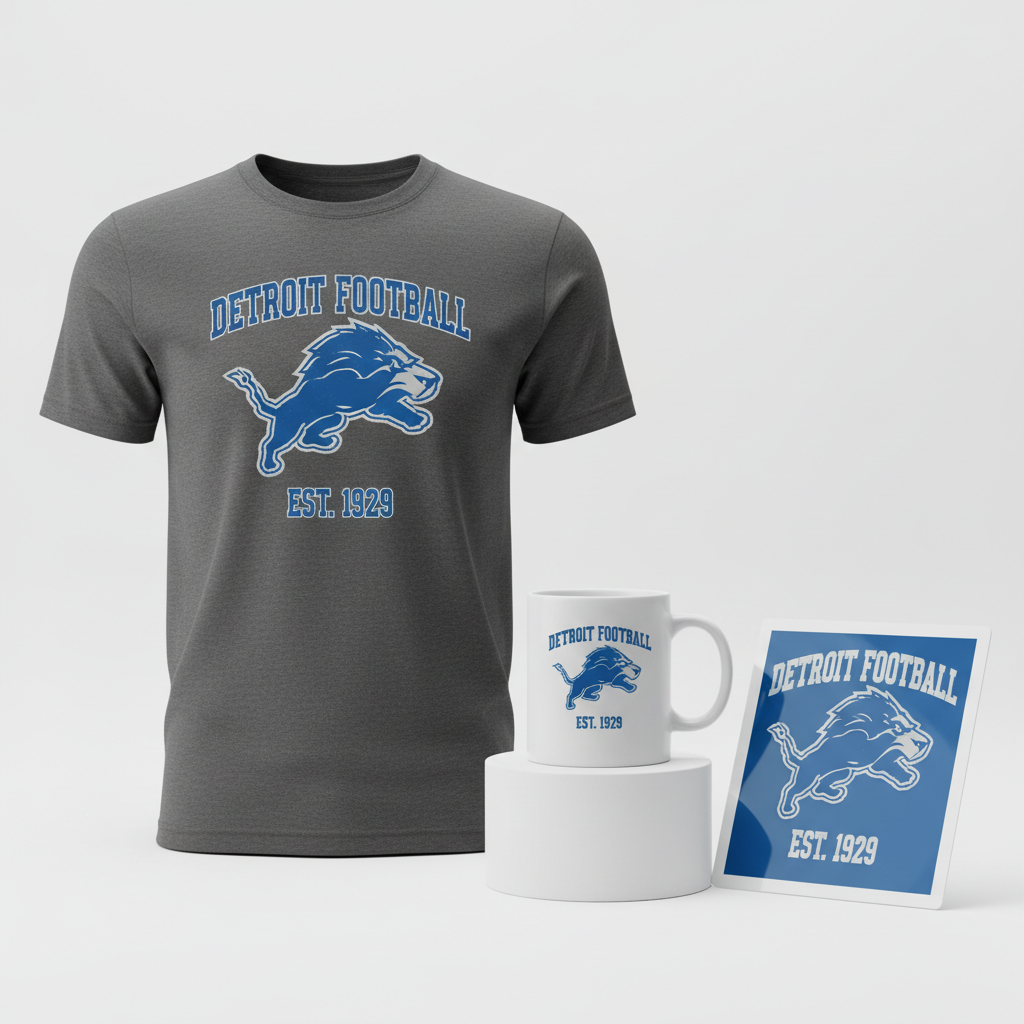
- 🎨 Visual Style: The proposed merchandise concept masterfully blends heritage with a modern, edgy appeal. It features a distressed, vintage athletic department design that immediately evokes a sense of history and authenticity. The main graphic is a stylized, fierce lion’s head – crucially, not the official team logo, but a classic sports mascot rendition that feels both familiar and distinct. This artistic choice offers a powerful symbol of strength and aggression without infringing on official branding. The color palette of faded royal blue and silver-grey further enhances the vintage feel, giving the apparel a lived-in, timeless quality.
- ✍️ Typography: Complementing the visual style, the typography employs a bold, cracked, sans-serif slab font, reminiscent of those found on classic university sweatshirts or championship banners. The text, “DETROIT FOOTBALL EST. 1929,” is a deliberate nod to the team’s long-standing legacy. The “EST. 1929” detail is particularly potent, anchoring the design in the team’s enduring history and appealing to fans who appreciate the deep roots and tradition of their beloved franchise. This text element transforms a simple garment into a statement of historical allegiance.
- 👕 Product Selection: The design is ideally suited for dark apparel. The faded royal blue and silver-grey elements, combined with the distressed aesthetic, pop vividly against a dark background like black or charcoal. This choice ensures maximum impact for the vintage graphic and typography, making the merchandise visually striking while maintaining its classic, understated appeal. Dark apparel also inherently conveys a sense of sophistication and versatility, allowing fans to wear their pride in various settings.
Strategic Market Insight
This merchandise concept directly targets the core demographic of the Detroit Lions: a fanbase characterized by its passionate, long-suffering, and now undeniably optimistic spirit. The psychological trigger here isn’t just about a new player; it’s about deep-seated enduring loyalty to the city and the team. Fans will purchase this not merely for Cade Mays, but as a testament to their unwavering support for the entire history and future of their team. The design’s vintage, non-official aesthetic is a stroke of genius, offering a solution to year-round wearability. It allows fans to express their pride at games, around town, or casually, without the merchandise feeling tied to a specific season or official roster. By pivoting from a singular player to the evergreen concept of city and team pride, enhanced by a strong historical reference, this design taps into a powerful, permanent emotional connection, ensuring broad and lasting appeal beyond immediate trends.
⚖️ Estimated Copyright Risk: LOW
Risk Assessment: The design avoids all trademarked assets. It does not use the player’s name, the official team name ‘Lions’, or any official logos or wordmarks. ‘Detroit Football’ is a generic descriptor of the sport played in the city. The lion graphic is a generic representation of the animal, not the copyrighted team mascot. This is a broad trope workaround focusing on city pride and the general sport.
Always verify intellectual property rights before listing.
Check US Trademark Database (Justia) for “Cade Mays” ➔
AI Image Generation Prompts
The following prompts are optimized for leading generators to produce production-ready assets:
👕 Apparel / T-Shirt Prompt
A highly detailed, clean vector illustration, perfectly isolated on a solid dark charcoal background, featuring a distressed vintage athletic department design. The centerpiece is a stylized, fierce lion's head, rendered with exceptionally crisp, geometric vector lines and bold, defined contours, evoking the powerful aesthetic of classic university sports mascots from the mid-20th century. The lion's expression is assertive and dynamic, with sharp eyes and a stylized mane flowing around its face, executed in a precise, almost minimalist vector art style. The color palette is restricted to a faded royal blue and a muted silver-grey, applied in flat, distinct areas with minimal gradients. Overlaid on this clean vector base is a sophisticated distress texture, comprising fine, irregular cracks, subtle worn edges, and areas of faded color, simulating an authentic, aged screen print on vintage collegiate apparel. Below the lion's head, the text "DETROIT FOOTBALL" is rendered in a bold, impactful, sans-serif slab font, each letter exhibiting significant cracking, chipped edges, and a faded appearance, consistent with a well-loved, vintage sweatshirt. "EST. 1929" is positioned beneath, also in a complementary distressed slab font, maintaining the cohesive retro aesthetic. The entire graphic design is meticulously crafted to appear as a high-resolution, retro-inspired emblem, with sharp vectorized elements underneath the perfectly applied grunge effect. The illustration style prioritizes clarity of form with a carefully controlled vintage patina.
The ONLY text allowed in the image is exactly 'DETROIT FOOTBALL
EST. 1929'. Absolutely NO other names, words, or random letters. --ar 3:4 --v 6.0
🔍 Search this niche on:
☕ Drinkware / Mug Prompt
A flat, panoramic layout specifically designed for a coffee mug wrap, featuring a duplicated side-by-side presentation of the exact same distressed vintage athletic department design. On both the left and right sides of this wide canvas, the central graphic is a stylized, fierce lion's head, rendered with robust, angular lines and a commanding expression, embodying the spirit of classic sports mascots. The lion's head, along with the accompanying text, uses a color palette of faded royal blue and silver-grey. Below the lion, the bold, cracked, sans-serif slab font displays "DETROIT FOOTBALL" and "EST. 1929", each character showing a convincing aged and worn texture with fine cracks and subtle fading. The entire design on both sides exhibits a consistent vintage distress effect, mimicking the look of aged screen-printed graphics. The background is a clean, pure white, allowing the faded royal blue and silver-grey colors to pop. The intention is a pristine digital file ready for sublimation onto a glossy ceramic mug, ensuring a perfect, repeating, wrap-around graphic when applied. The overall aesthetic is clean graphic design with a strong vintage, collegiate athletic influence.
The ONLY text allowed in the image is exactly 'DETROIT FOOTBALL
EST. 1929'. Absolutely NO other names, words, or random letters. --ar 3:1 --v 6.0
🔍 Search this niche on:
✨ Die-Cut Sticker Prompt
A vibrant, 2D flat pop-art style die-cut sticker design, isolated against a pristine white background. The central graphic is a stylized, fierce lion's head, rendered with bold, clean, simplified lines and strong graphic impact, typical of classic pop-art illustration. The lion's expression is commanding, reminiscent of iconic mid-century sports mascots, with minimal shading to maintain its flat, graphic quality. The color palette is composed of faded royal blue and silver-grey, applied in solid, distinct areas. Overlaid on this clean graphic base is a subtle, stylized vintage distress texture, manifesting as fine, artfully applied cracks and a slightly worn appearance, carefully integrated to complement the pop-art aesthetic without compromising its clarity. Below the lion, the text "DETROIT FOOTBALL" is presented in a bold, sans-serif slab font, showcasing a clear, stylized cracked effect that mirrors the vintage athletic look. "EST. 1929" follows in a similar distressed slab font. The entire completed design is encircled by a prominent, thick white outline border, providing a clear "cut line" effect, perfect for a modern die-cut vinyl sticker. The overall mood is retro-cool, iconic, and graphically striking, designed for maximum visibility and appeal as a standalone sticker.
The ONLY text allowed in the image is exactly 'DETROIT FOOTBALL
EST. 1929'. Absolutely NO other names, words, or random letters. --ar 1:1 --v 6.0
🔍 Search this niche on:
Frequently Asked Questions
Why choose a non-official logo design over official team branding?
Opting for a stylized, non-official lion’s head rather than the official team logo offers several key advantages. It provides creative freedom for a unique vintage aesthetic, avoids potential copyright complexities often associated with official marks, and allows fans to wear something that feels exclusive and distinct. This approach caters to those who appreciate a more subtle, classic homage to their team, appealing to a broader fashion sensibility that transcends typical gameday wear.
Who is the primary audience for this specific vintage “Detroit Football Est. 1929” design?
While immediately appealing to hardcore Detroit Lions fans, this design also targets a broader audience. It speaks to those who appreciate vintage sports aesthetics, residents of Detroit with strong civic pride, and even gift-givers looking for timeless, quality fan apparel. The “EST. 1929” element particularly resonates with those who value history and legacy, making it attractive to anyone who identifies with the enduring spirit of the team and city.
How does the distressed look contribute to the merchandise’s appeal and longevity?
The distressed, vintage aesthetic significantly enhances the merchandise’s appeal by giving it an immediate sense of authenticity and character, as if it’s a well-loved piece from an earlier era. This style also contributes to longevity by naturally masking minor wear and tear, meaning the garment can be worn frequently and age gracefully, appearing even more “vintage” over time. It makes the item feel less like disposable trend-wear and more like a cherished collectible.
💬 Seller Strategy Discussion
Considering the rapid rise of trending topics like Cade Mays and the strategic use of vintage, non-official branding, what specific marketing tactics would you employ to ensure this design captures both immediate trend-driven buyers and the evergreen loyalty of the Detroit Lions fanbase, while clearly communicating its unique aesthetic and avoiding any intellectual property pitfalls?