
Created by Humans, Not Algorithms
A profound debate is currently electrifying creative communities across the United States, ignited by the sudden, virtual arrival of a new ‘talent’: Tilly Norwood. This AI-generated sensation, with her debut single and music video, has swiftly become a flashpoint, forcing a nationwide reckoning with the rapidly evolving role of artificial intelligence in artistic expression and the very definition of creativity itself.
The Cultural Significance
The emergence of Tilly Norwood isn’t just a quirky digital anecdote; it’s a direct challenge to the foundations of human artistry. In a country that prides itself on innovation but also deeply values individual talent, her debut has polarized opinions. On one side are those intrigued by the technological marvel, seeing a glimpse of future possibilities. On the other, and far more vocal, are the legions of human artists—musicians, illustrators, writers, and performers—who view AI-generated content as a direct threat to their livelihoods, their authenticity, and the soulful core of their craft. This isn’t merely about one ‘singer’; it’s a proxy battle for the soul of creativity, questioning whether algorithms can truly replace the human experience, emotion, and struggle inherent in genuine art. It’s a moment that asks: what does it mean to be an artist in the age of AI?
Design Brainstorm: Capturing the Aesthetic
Translating such a potent cultural moment into merchandise requires a thoughtful approach, one that resonates deeply without being ephemeral. This design concept aims to capture the underlying sentiment rather than just the passing trend, giving it lasting relevance.
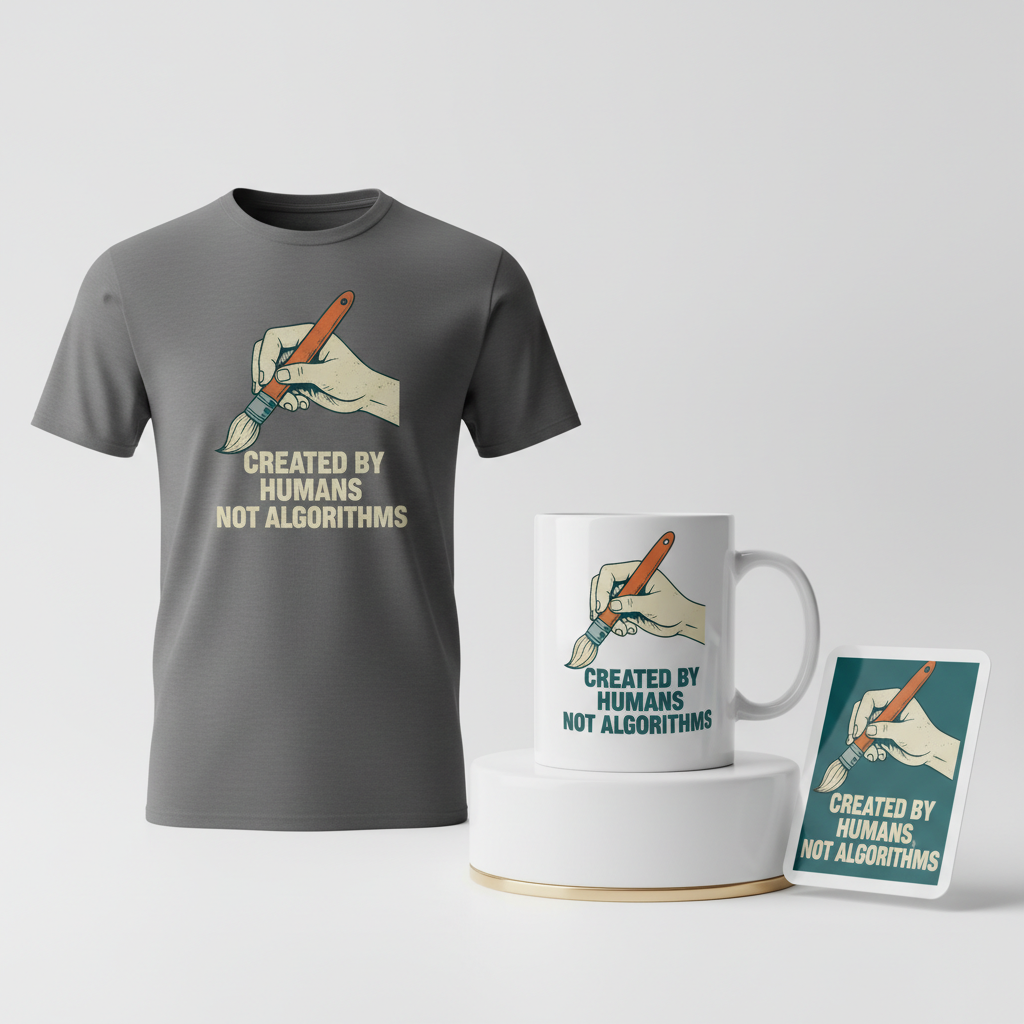
- 🎨 Visual Concept: One angle to consider features a stylized, retro-inspired human hand, perhaps slightly calloused, holding a classic paintbrush. This visual immediately evokes the timeless craft of creation, signaling tradition and human effort. The “retro-inspired” touch could add a sense of nostalgia for a time before digital dominance, reinforcing the ‘human touch’ narrative.
- ✍️ Typography Ideas: Below the symbolic hand, the phrase “Created by Humans, Not Algorithms” could be rendered in a slightly distressed, bold, sans-serif typeface. The distressed texture might hint at the wear and tear of real human effort or even the current tension in the creative world, while the bold sans-serif ensures legibility and impactful messaging.
- 👕 Product Canvas: For maximum contrast and to let the muted color palette shine, this design could translate well onto dark apparel. Think deep charcoal tees, navy hoodies, or black sweatshirts. The proposed palette of off-white, orange, and deep teal on a dark background would evoke that desired vintage feel while ensuring the message stands out clearly.
Strategic Market Insight
The genius of pivoting from the specific “Tilly Norwood” phenomenon to the broader “Human vs. AI” debate lies in its strategic foresight. While the former is a temporary news cycle, the latter is an evergreen, passionate argument. The target demographic—human artists, illustrators, writers, musicians, and their ardent supporters—represents a highly engaged, emotionally invested community. Purchasing merchandise with a message like “Created by Humans, Not Algorithms” isn’t just buying a product; it’s a declaration of identity, a show of solidarity, and an act of advocacy. It taps into the psychological triggers of belonging, authenticity, and protest against perceived threats. This approach also smartly sidesteps potential intellectual property issues by avoiding all specific names or entities, focusing instead on a universally relatable and emotionally charged sentiment that resonates deeply within the anti-AI art community. It’s a design poised for impact, both cultural and commercial, while adhering to content guidelines.
⚖️ Estimated Copyright Risk: LOW
Copyright Evaluation: The design concept targets the broad trope of valuing human-made art over artificial intelligence. The phrase ‘Created by Humans, Not Algorithms’ is a descriptive statement of belief, not a registered trademark. The name ‘Tilly Norwood’ is intentionally avoided to prevent any potential IP conflicts. A search for the brand ‘HUMAN MADE’ shows it’s a registered trademark for clothing, so I have specifically chosen a different phrase to avoid bot rejection and infringement.
Always verify intellectual property rights before listing.
Check US Trademark Database (Justia) for “Tilly Norwood” ➔
AI Image Generation Prompts
The following prompts are optimized for leading generators to produce production-ready assets:
👕 Apparel / T-Shirt Prompt
A clean vector illustration, isolated on a solid dark background, featuring a stylized, retro-inspired human hand holding a classic paintbrush. The art style is graphic, combining mid-century modern aesthetics with crisp, sharp lines and flat color blocks, ideal for screen printing. The hand is rendered in a blend of muted burnt orange and deep desaturated teal, with off-white highlights defining its elegant, poised form. It's a generic human hand, iconic and timeless. The classic paintbrush has a slender wooden handle in muted orange tones, a metallic ferrule in deep teal, and traditional bristles in off-white, with subtle hints of paint. Below the hand, the phrase "Created by Humans, Not Algorithms" is set in a bold, sturdy sans-serif typeface, exhibiting a subtle, organic distressed texture, simulating a worn screen print. The text is primarily off-white for strong contrast against the dark background. The color palette within the design is strictly limited to muted burnt orange, deep desaturated teal, and creamy off-white, creating a vintage, sophisticated feel. The rendering is pure vector art, with smooth, flat color fills and perfectly defined edges, ensuring scalability and clarity. The overall composition is balanced and impactful, evoking creativity, craftsmanship, and human ingenuity with a nostalgic charm. The ONLY text allowed in the image is exactly 'Created by Humans, Not Algorithms'. Absolutely NO other names, words, or random letters. --ar 3:4 --v 6.0
🔍 Search this niche on:
☕ Drinkware / Mug Prompt
A duplicated side-by-side layout showing the exact same graphic on the left and right, designed perfectly for a panoramic mug wrap. The graphic features a stylized, retro-inspired human hand holding a classic paintbrush, rendered in a vintage illustration style with a silkscreen-inspired textured aesthetic. The hand is dynamically posed, in flat shapes of muted burnt orange and deep desaturated teal, with creamy off-white accents for highlights. The paintbrush has a rustic wooden handle in muted orange, an aged metallic ferrule in deep teal, and soft, natural bristles in off-white. Below the hand, the phrase "Created by Humans, Not Algorithms" is rendered in a bold, slightly condensed retro sans-serif typeface, featuring a pronounced distressed effect simulating ink wear. The text is off-white for maximum legibility, potentially with a thin muted orange outline, positioned to complement a mug's curve. The design utilizes a core palette of muted burnt orange, deep desaturated teal, and creamy off-white, applied with subtle halftone patterns or stippling within color blocks to enhance the retro feel. The background *within the graphic* is a soft, muted off-white, resembling aged paper or ceramic, creating a cohesive base for the wrap. The entire composition is inspiring, artistic, and nostalgic, with a seamless flow across the wide panoramic format. The ONLY text allowed in the image is exactly 'Created by Humans, Not Algorithms'. Absolutely NO other names, words, or random letters. --ar 3:1 --v 6.0
🔍 Search this niche on:
✨ Die-Cut Sticker Prompt
A bold, 2D flat pop-art style die-cut sticker design, featuring a highly stylized, retro-inspired human hand holding a classic paintbrush, encircled by a thick white outline border. The art style is characterized by strong, clean black outlines, large areas of flat, unblended color, and a high-contrast aesthetic reminiscent of vintage comic art. The hand is assertively posed, rendered in flat blocks of muted burnt orange and deep desaturated teal, with crisp off-white accents defining its form. The classic paintbrush has a wooden handle in muted orange, a metallic ferrule in deep teal, and thick, expressive bristles in off-white, all with prominent black outlines. Below the hand, the phrase "Created by Humans, Not Algorithms" is set in a very bold, impactful, slightly rounded sans-serif typeface with a highly distressed, grunge-like texture, suggesting authentic screen-printed wear. The text is primarily off-white with a subtle, thin deep teal inner shadow. The entire composite design – hand, brush, and text – is contained within and sharply defined by a very prominent, thick white outline border, creating a classic die-cut sticker appearance. The color palette is strictly muted burnt orange, deep desaturated teal, and creamy off-white, providing a vibrant yet vintage feel. The mood is energetic, creative, and rebellious. The ONLY text allowed in the image is exactly 'Created by Humans, Not Algorithms'. Absolutely NO other names, words, or random letters. --ar 1:1 --v 6.0
🔍 Search this niche on:
Frequently Asked Questions
How does this design capture the essence of the ‘Tilly Norwood’ discussion without directly referencing her?
This design ingeniously extracts the core conflict from the “Tilly Norwood” debate—the tension between human and artificial creativity—and distills it into an enduring message. By focusing on “Created by Humans, Not Algorithms,” it directly addresses the fear and frustration many artists feel about AI’s role, without tying the merchandise to a temporary, specific entity. It’s about the principle, not the personality, making it relevant long after the initial news cycle fades.
What emotional chord does a design like ‘Created by Humans, Not Algorithms’ strike with its target audience?
For human artists and their supporters, this design acts as a powerful affirmation of their worth, skill, and irreplaceable contribution. It resonates deeply with feelings of identity, pride in craftsmanship, and solidarity against a perceived existential threat. Wearing this merchandise can be a statement of protest, a badge of honor, and a conversation starter, fostering a sense of community among those who believe in the unique value of human-generated art.
Are there any intellectual property concerns when creating merchandise inspired by a trending topic like an AI-generated artist?
One of the key strengths of this design concept is its proactive avoidance of intellectual property issues. By using generic, universally understood symbols (a human hand, a paintbrush) and a general statement (“Created by Humans, Not Algorithms”) rather than specific names, likenesses, or copyrighted phrases related to ‘Tilly Norwood’ or any other specific AI entity, the design remains safe. This careful approach ensures it aligns with content policies across various platforms, focusing on the broader cultural conversation rather than specific, protected elements of the trend.
Final Thoughts
The ripple effect of phenomena like Tilly Norwood underscores a significant shift in the creative landscape, presenting unique opportunities for e-commerce. Designs that tap into these deep-seated cultural conversations, especially those offering a strong message of solidarity and identity, possess considerable potential. The “Human vs. AI” debate is far from over, ensuring that well-executed merchandise reflecting this sentiment could find a dedicated audience for years to come. Success in this evolving market, as always, will hinge on thoughtful design, genuine resonance, and a clear understanding of the community you aim to serve.
💬 What’s Your Take?
Art is subjective, and this is just one angle! How would you spin this “Tilly Norwood” trend? Did we miss the mark, or is there a better inside joke to use here? Drop your design ideas and let’s brainstorm in the comments below!